Showing posts with label audio recording. Show all posts

Friday, February 15, 2013

How to use EQ in Tracks

It can be a challenge to learn how to use an EQ plugin in music production, but there a few tips that can make using the EQ a lot easier.

For one thing, you should really try to listen to the track while you are working with it. You don't need to try to memorize what different Hz frequencies will sound like. It can be helpful at times to know this information, but typically you won't be working with the same frequency all the time. Before you use the EQ, listen to the track so you can hear what parts of the track need to be equalized. This will give you the knowledge that you will need to have in order to use the EQ on the track.

Next, when it comes to EQ, less is always going to be better. Adding too much to a track can make it sound really muddled. It can often be tempting to add more and more different aspects to a track, which is not what you will want to do in most cases. So, instead of seeing what EQ can put into the track, you will want to see what the EQ can subtract from the track. Instead of using the EQ to add in more of something, like vocals, use the EQ to cut out something, like bass, in order to bring the vocals out more in the track.

The key is to get rid of some of the frequencies that are competing with others on the track. You need to listen to do different parts of the track by themselves to get an idea of what they sound like. Then, use the EQ on different parts of the track. Make sure that you listen to the entire track together first though so that the EQ fits in with the rest of the track on all the frequency levels.

You need to know that with an EQ plugin that the key is to get some balance in the track. If you are working with a pop tune, for instance, it's often true that the vocals are meant to be the main part of the track. So, you will want to use the EQ to subtract some of the other parts of the track in order to really bring out the vocals. One great thing about EQ is that if you have problems with the way a track was recorded you can use the EQ plugin to attempt to correct for some of these problems.

Monday, December 31, 2012

Home Audio Equipment for Recording Musicians

Home audio equipment presents customers with a vast array of products and choices, so it's time to inform yourself of those choices and give yourself the knowledge needed to make smart choices from a wide variety. Modern technology allows anyone to transform a room of their house into a built-in theater or professional studio, and products range in the power of their sound, the depth of their sound, the percussion of their sound and the clarity of their sound. Welcome to the world of home audio equipment.

Whether purchasing for music, recording or entertainment, there are certain categories your purchases are going to fall into. Woofers and subwoofers are essential additions: loudspeakers that specialize in amplifying low frequency sounds, improving the depth and dimension of sound. A/V receivers also amplify sounds, and serve as connectors to bridge between many audio sources, from musical instruments to television sets and MP3 players. Standing speakers, shelf models and wall units are another versatile addition to home audio equipment, and several smart purchased can achieve the desired surround-sound. A well-placed woofer, subwoofer and wall-mounted speakers can make the difference in a state of the state sound system.

Headphones are an underrated necessity that have been unfairly dismissed in modern sound systems. When the point of most sound systems is to project the perfect sound, headphones almost seem counterintuitive if not for the essential advantages of their function. For starters, headphones allow sound systems to be enjoyed privately and quietly in case of neighbors, roommates, friends or family members.

More importantly, a quality pair of headphones can isolate the entirety of sounds just as well as expensive speakers and woofers, and their close proximity to the ears allow people to hear previously unheard beats, instruments and arrangements. Both earbuds and headsets should be included as this subtle necessity for properly enjoying home audio, and shouldn't be overlooked when shopping for larger and more bombastic products like home theater systems, sound bars, speakers, receivers, stereo shield systems and streaming audio technology.

Seasoned consumers know to test most audio equipment before purchase or immediately after, since all of the technical specs in the world won't be able to truly convey the experience of the sound that would otherwise be effortlessly distinguished by the human ears. Another rule of thumb in purchasing audio equipment is to be mindful of the price, since professional studio equipment will cost a sizable amount more than comparable home theater set ups. As far as sound equipment is concerned, there is little in the way of corner cutting beyond purchasing used equipment from a trusted sort.

Wednesday, December 5, 2012

Top Vocal Recording Tips

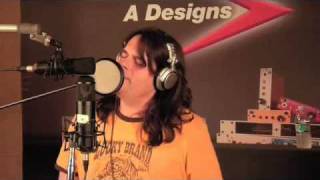
For an excellent vocal recording session, you first need to make sure your singer is comfortable with their surroundings, and they are under no pressure while they are recording. They also need to be able to focus. The easiest way to make sure the singer is not distracted is to make sure that it is only them and the producer in the studio when they are recording.

You also need to make sure that the room you are recording in is in good enough shape to be used as a studio. You would want a sound proof room with little to no echo so that the audio that you are singing doesn’t bounce off the walls and if someone is outside the room you cannot hear them. If you can hear people outside the room, you may be able to hear them on the recording and that will also cause a huge distraction to the vocalist.

Pop shields between the microphone and the singer help eliminate the unnatural “b” and “p” sounds. If you do not have one of these you can use panty hose stretched around a wire, this is a cheap fix but it works until you can afford actual equipment.

Make sure that the singer is provided a good microphone; this could be the difference between creating a hit and creating horrible sounding audio. Remember the saying, you get what you pay for, in this situation that is the case. The recommended microphone to use when recording is a large diaphragm condenser microphone. Also the microphone should be at the right distance from the singer. They should not sound too far away, but you also don’t want them sounding like they are standing right over the microphone. The right distance is about a foot away from the vocalists face.

Reverb on the vocals in the audio can also help make the audio sound stronger and is more acceptable to the listening ear. Also singing again over the track will help make the vocalist’s voice sound a lot stronger. Singers may also sing to the side of the microphone which will help eliminate some sounds that will sound harsh when they are spoken directly into the microphone.

One final vocal recording tip you should always remember is to listen to what you want you music to sound like before you begin, get a good idea of it in your head and go from there. Also make sure that you are always checking the audio and fixing it as you go, rather than doing a whole song over and over until you have it right.